
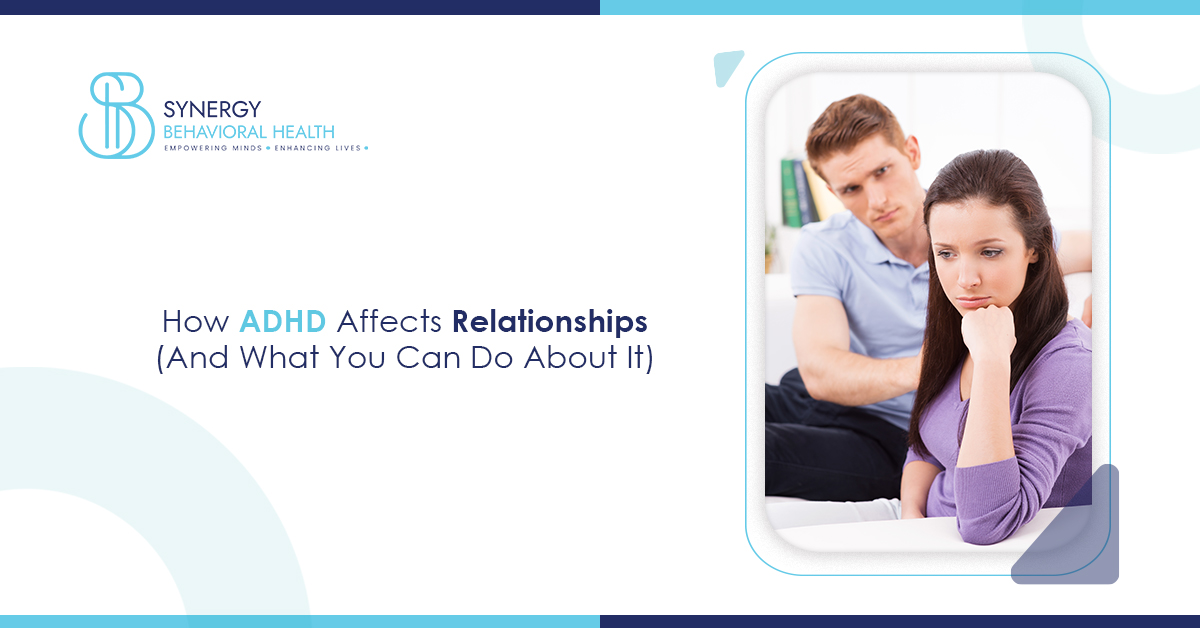
Sometimes relationships feel a bit one-sided.
When ADHD enters the picture, whether it is just one partner, both, or even woven into larger family dynamics, tiny everyday moments become sources of simmering frustration. It is rarely about a lack of care or concern.
More often, quick shifts in attention are to blame; important details seem suddenly lost forever, or emotions arrive faster than expected.
Late or missed appointments, conversations that drift and disappear somewhere near their end; household responsibilities falling mostly toward one particular person.
These create distance over time, leaving someone feeling unseen while another becomes not good enough or too much.
These are the kinds of stories that regularly come up at Synergy Behavioral Health in appointments. People walk in feeling beaten down by the same old repeating patterns.
However, once those patterns get named and understood, many notice that the strain begins to lift and closeness returns in a way that feels more sustainable.
Where ADHD Tends to Show Up
ADHD influences how attention works, how impulses are managed, and how everyday life gets organized. Those influences naturally touch the closest relationships.
In Romantic Partnerships
The beginning often feels intense and connected. That characteristic hyperfocus can make a new relationship sparkle. As daily routines take over, however, different habits surface.
- Drifting attention makes the other person feel seen-invisible.
- Sometimes the words that are uttered fast in the middle of a quarrel cut much deeper than they were ever intended.
- The daily responsibilities such as bills, cleaning and planning, tend to gravitate towards one side and develop a slow-smoldering resentment or guilt/defense on the other.
At some point one individual tends to get most of the mental burden and the other may feel that they are being nagged at all times.
Neither role is very comfortable, and it turns into a cycle of self-perpetuation.
In Friendships and Family Ties
The ripple effects go beyond couples.
- Plans made with genuine excitement can dissolve at the last moment, making reliability feel uncertain.
- Jumping into conversations or missing subtle social signals can create gradual distance.
- Pouring energy into a current passion sometimes leaves less bandwidth for catching up or shared activities.
- Emotions that flare up suddenly can leave family members or friends unsure how to respond.
These moments accumulate quietly.
Months or years on, an ADHD person may feel that their friends are no longer as friendly, or their family relationships are becoming uncomfortable without really knowing what happened.
Most adults do not start to put this together until many years later in life especially when symptoms during childhood were not recognized or reported.
If difficulties with attention and organization-forgetfulness sound familiar, it could very well be a case of undiagnosed ADHD.
In many other instances, it might be a neurodevelopmental disorder that silently underlies the life of an adult until someone decides to take a closer look.
Steps That Often Help
The turning point usually starts with understanding. Once the patterns feel less mysterious, practical changes become easier to try.
Strengthening Communication
Creating space for real talk matters more than perfect words.
- Setting aside a short distraction-free check-in each day or a longer one each week.
- Choosing softer phrasing tends to invite understanding rather than defense.
- Taking a moment to repeat back what was heard, just to make sure nothing got lost.
Adding Gentle Structure
A few shared systems reduce daily friction.
- A joint calendar or reminder app that keeps commitments in plain view for both.
- Clear, flexible arrangements concerning work, which are best suited to the natural capacities of each.
- Low-pressure conversations every week or so about what feels nice and what still feels off.
Managing Emotions Together
ADHD can amplify emotional intensity. Building in pauses changes the dynamic.
- Agreeing on a simple signal, maybe a word or a gesture, to step back briefly when voices rise.
- Making room to notice and mention small positives, which helps balance the focus on challenges.
When Professional Support Becomes Useful
Many people find relief through these everyday adjustments alone. Whenever the same cycles continue to repeat even with effort, however, a fresh outlook usually opens the door.
Symptoms can also be stabilized with medication when it makes sense to the individual.
Reaching out earlier rather than waiting until exhaustion sets in usually leads to smoother outcomes.
Reach Out Today
If ADHD appears to be creating unnecessary distance in important relationships, help is straightforward to access.
At Synergy Behavioral Health in Westchester, Illinois, sessions focus on truly listening, designing approaches that fit actual daily life, and supporting gradual, lasting change.
A single initial conversation often brings clarity and relief. Contact the team whenever it feels right to explore next steps.
FAQs
Does ADHD always strain relationships?
Not at all. Many people with ADHD build and maintain deep, satisfying connections. The difference usually comes from awareness and consistent small efforts.
What if only one person is ready to work on it?
Starting individually like gaining knowledge, experimenting with new habits, can create noticeable shifts. Change from one side often encourages the other to engage.
Do children with ADHD experience similar relationship challenges?
They frequently do, especially around friendships and family interactions. Early support equips them with skills that make connections easier as they grow.


)