You know those moments when a place suddenly feels impossible. Too many sounds. Lights that hurt your eyes. Smells that will not quit. Clothes that feel wrong against your skin.
Most people can handle it for a little while. For many others, especially people with autism or sensory processing differences, that feeling hits hard and often. It can turn a normal day into something very difficult.
At Synergy Behavioral Health in Westchester, Illinois, we hear these stories all the time from families. Kids who need to leave stores quickly. Teens who struggle in busy classrooms. Adults who find work meetings or grocery runs draining.
Call us at 331-684-0383 if this sounds familiar.
Here is an explanation of what sensory overload is, how it feels and some ways to manage it.
What Sensory Overload Really Means
Your brain takes in information from your senses every second.
- Noise.
- Light.
- Smell.
- Touch.
- Movement.
In most people, the brain filters out a lot of it automatically. You can pay attention to what is important.
For some people, that filtering works differently. Much more information gets through. When too much arrives at the same time, the brain reaches its limit. It stops sorting calmly. It switches to survival mode.
This is not about being sensitive on purpose. It is simply the way the nervous system is wired for that person.
We see it often in autism. Also, in other sensory processing differences.
How It Feels When It Happens
Everyone experiences it a little differently. But these are the things people describe most often.
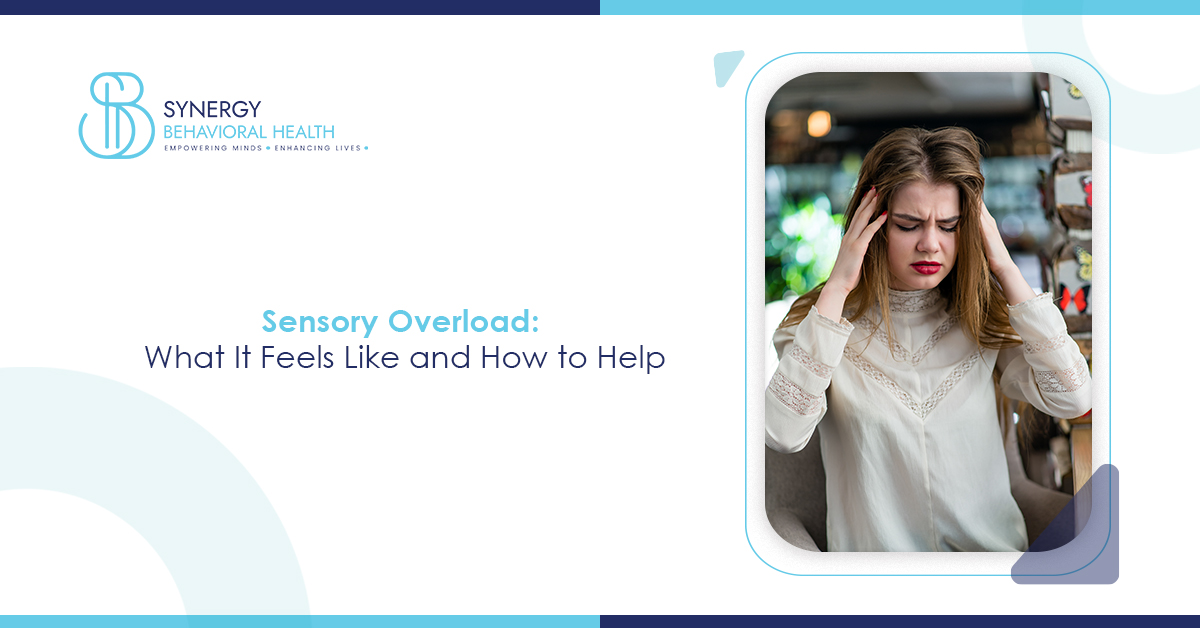
- Sounds build up quickly. Normal conversation turns into a loud roar. Every little noise adds more pressure until it feels painful.
- Lights feel sharp and bright. Overhead fluorescents are especially tough. Eyes start to water or hurt. Focusing becomes hard.
- Touch turns uncomfortable. Shirt tags scratch, socks feel bumpy. Even a light breeze on the skin can feel irritating.
- The body reacts fast. Heart races, hands sweat, chest tightens, legs shake. Sometimes dizziness or nausea comes along.
- Emotions rise suddenly. Irritation becomes anger. Anxiety becomes panic. Everything feels overwhelming in seconds.
- Some people shut down. Words stop coming. Body feels heavy. Thinking slows or goes blank.
- Others feel trapped. They need to escape immediately.
Many people say it is like someone turned every sense up to maximum volume. No way to turn it down.
Related – How Do Sensory Sensitivities Affect Daily Life with Autism?
Common Triggers
Certain situations make overload much more likely.
- Crowded places like supermarkets. Restaurants. School hallways. Waiting rooms.
- Bright or flickering lights. Especially long office-style tubes.
- Strong smells from perfume. Food courts. Cleaning products.
- Loud or unexpected noises like sirens. Slamming doors. Announcements.
- Clothing problems such as scratchy fabrics. Tight elastic. Seams in socks.
- Too many people moving and talking around you at the same time.
Once you notice what sets it off, it becomes easier to spot trouble early. Keep a simple list. Note what happened before tough moments.
What Helps When It Is Happening
If overload starts building or is already there, these steps often bring things back down.
Move to a quieter lower light area as soon as you can. A hallway. Outside space. The car works well.
- Reduce the input. Cover your ears for a moment. Shield eyes. Turn down lights if possible.
- Keep communication short and calm. Use a gentle voice. Few words. No sudden questions.
- Have tools ready. Noise-cancelling headphones. Sunglasses. A small fidget item. Earplugs. A soft piece of fabric.
- Try slow breathing. In for four seconds. Out for four seconds. It helps settle the body when someone is open to it.
- Use deep pressure if they like it. A firm hug. A heavy blanket. Pressing palms together.
- Give time to recover afterwards. Quiet space. No talking. No rushing back into things.
The sooner you act, the less intense it usually gets. Families we work with find that these steps make outings possible again.
Ways to Reduce It Over Time
You can lower how often it happens with some simple planning.
- Choose quieter times for errands or outings.
- Build short breaks into the daily routine.
- Create calm areas at home or school. Softer lights. Less noise. Comfortable seats.
- Prepare ahead of time. Talk about what the place might be like. Bring familiar items. Have an easy way to leave.
- Pick clothes and shoes that feel comfortable all day.
- Talk with schools or workplaces about small changes. Dimmer lights. Quiet corners.
When overload keeps making school work or family life hard, extra help makes a real difference.
- Professional treatment.
- School accommodations.
- Practical strategies can lead to fewer rough moments.
At Synergy Behavioral Health we do this work every day. Our compassionate care covers children through seniors. We focus on evidence-based support in a safe space.
Get an Appointment Today
If sensory overload affects daily life for you, reach out to Synergy Behavioral Health.
Call 331-684-0383 now. We help families build calmer routines and better coping skills.
FAQs
Is it the same as a meltdown?
Overload is the buildup of too much input. A meltdown is often what happens when that buildup becomes impossible to hold.
Do adults experience it too?
Yes. Many adults face it at work. In stores. During social situations. Even at home.
Can it ever get better?
Most people find it much easier to manage with the right tools. Routines. Support.