We’ve spent a lot of time talking to parents, kids and adults on the spectrum. This is what comes up, again and again.
For most people with autism, the world just feels louder or brighter or rougher.
Sometimes it is actually the opposite. Everything seems a bit bland, and there is an urge to chase stronger sensations just to feel satisfied.
These sensory differences are not a footnote. They color every aspect of the day for many people on the spectrum.
Here at Synergy Behavioral Health, we see it all the time in those we work with. It is not laziness or bad behavior, it’s just different wiring.
What These Sensitivities Actually Look Like
A lot of people with autism process sights, sounds, smells, touch or movement more intensely. Sometimes barely at all.
One person might flinch at a whisper. Another needs to bounce or squeeze something tight to even notice their body.
It’s different for everyone. It can change depending on the day, how tired someone is, or what else is going on.
Some Common Examples
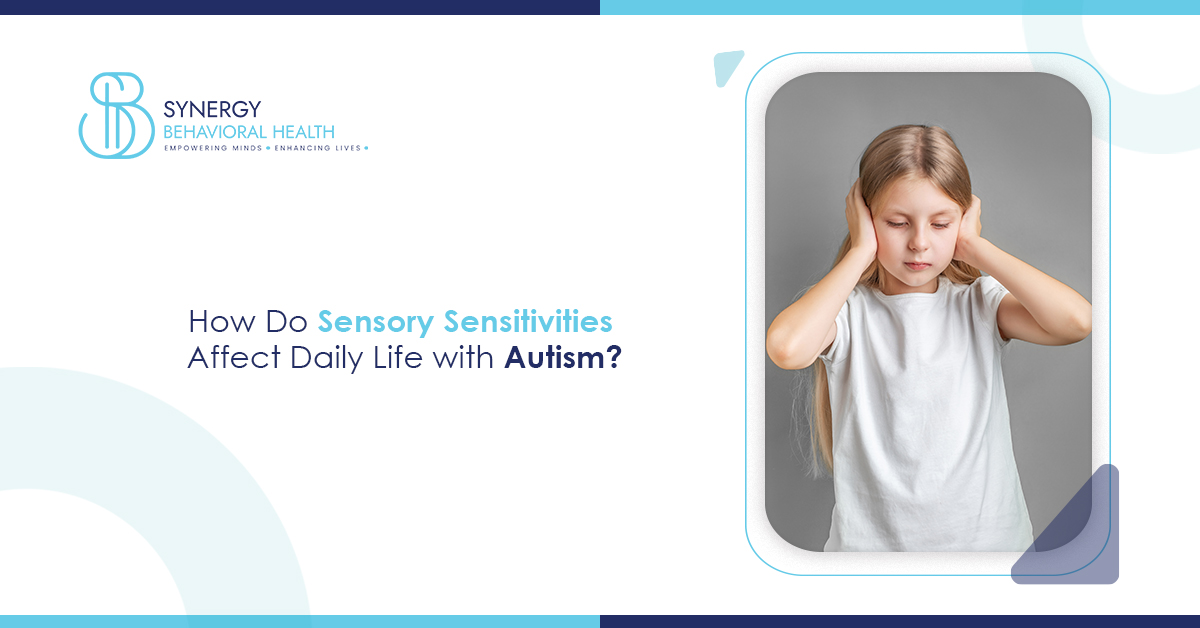
- A blender in the kitchen or voices overlapping can feel like shouting right in your ear
- Shirt tags, socks with seams, or certain fabrics can itch or hurt enough to ruin the morning
- Grocery store lights or sunlight through car windows might give an instant headache
- Strong food smells or mushy textures can make eating feel impossible
- Rocking, spinning, or pressing hard against furniture often helps the body feel “right”
No one has the exact same set of triggers or comforts, and that’s fine.
How It Plays Out in Regular Life
These things don’t just happen in big moments. They show up in everyday stuff and add extra weight.
At Home in the Morning
Picking clothes can take forever if nothing feels okay against the skin. Breakfast might be limited to a couple of safe foods because others smell too strong or feel wrong in the mouth.
Even washing hair or brushing teeth can turn into a fight if the water or bristles are too much.
You’ll often see families:
- Keeping only a few trusted outfits in the drawer
- Starting the day as quietly as possible
- Skipping casual hugs if touch feels overwhelming
When You’re Out in the World
A quick store run or a birthday party can turn exhausting fast. All the lights, carts clanging, people talking. It stacks up until the only option is to leave.
Families end up:
- Shopping early or late to avoid crowds
- Feeling nervous ahead of time about busy places
- Missing some gatherings because the recovery time just isn’t worth it
School or Work
Trying to concentrate on actual work while sitting in a classroom or office with bright lights, chairs scraping against the floor, and people talking all around.
It looks like daydreaming sometimes. It’s really the brain working overtime to handle the noise.
A typical day might include:
- Needing little breaks to step away and breathe
- Finding group conversations in echoey spaces is draining
- Getting home, completely spent from holding everything together
When too much builds up, it can spill over into a meltdown or just need to shut down for a bit.
Related – Can Adults Have Undiagnosed Neurodevelopmental Conditions?
Things That Help
It’s mostly trial and error to see what clicks.
Ideas Worth Trying
- Noise-canceling headphones
- Ear defenders for loud spots
- Soft clothes with no tags
- A weighted blanket at night
- A cozy corner with dim lights for downtime
- Running errands during quieter hours
- Gentle rocking when things feel off
None of these are huge overhauls, but they add up to calmer days.
Reaching Out for Support
If sensory stuff is making home, school, or relationships tougher than they need to be, talking to someone who gets it can open things up.
We gently support kids and teens, and adults at Synergy Behavioral Health in Westchester, Illinois.
If you notice someone you love experiencing these signs, please contact us.
Call or fill out the contact form for an appointment. With proper support, minor steps can make major differences in daily ease of living.
FAQs
Does everyone with autism have sensory issues?
Most do in one way or another. It’s even part of the diagnostic criteria now.
Do sensitivities ever get better?
They often ease up or shift as people grow, learn tools, or feel less stressed.
What about craving intense input, like crashing or spinning?
That’s usually the under-sensitive side. Safe ways to get that pressure or movement help a lot.
When should we get professional help?
Get help if it’s getting in the way of:
- School
- Friendships
- Just enjoying life