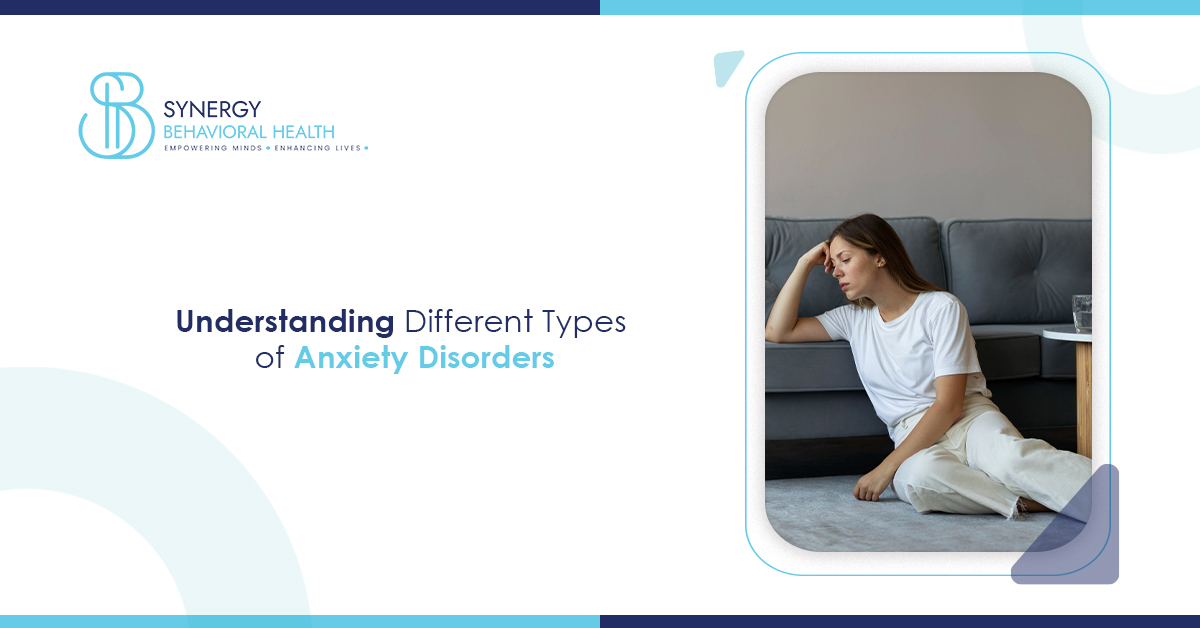
Your pulse quickens before a job interview. You feel nervous meeting new individuals. That’s quite normal.
But what happens when apprehension becomes your constant partner?
When you start avoiding activities you previously enjoyed, or when your thoughts endlessly cycle through the worst potential outcomes?
This is where understanding what you face becomes beneficial.
There are actually several different types of anxieties, and knowing which one fits your experience can point you toward real relief.
When Does Worry Cross the Line?
Normal stress has an off switch.
You complete the presentation, the event concludes, and you proceed.
Anxiety disorders function differently. The apprehension persists. It escalates. It begins to dictate your choices – all your daily plans, who you interact with, where you venture.
The Main Anxiety Kinds People Experience
Generalized Anxiety Disorder
It’s the “worry about all things” state. Your mind shifts rapidly from one worry to the next.
- Will my child be alright at school?
- What if I face job loss?
- What if this minor ache signals something serious?
It looks like:
- Repetitive, persistent worrying
- Unexplained muscle tension
- Mental exhaustion just from thinking
- Becoming short-tempered with loved ones
- Lying awake because your mind refuses to settle
Social Anxiety Disorder
This extends far beyond introversion. It’s the dread that everyone is observing, evaluating, and anticipating your failure.
You mentally rehearse interactions in advance. You meticulously review every exchange searching for faults.
At times, you’d prefer to skip the event entirely rather than confront that intensity.
What it really feels like:
- Your face flushes when asked a direct question
- You hesitate to offer input in discussions despite having valuable insights
- Social gatherings feel daunting rather than enjoyable
- You spend days dreading a simple outgoing phone call
- You develop the conviction that others find your presence unwelcome
Panic Disorder
Imagine your body triggering the crisis alert system when no danger is present.
Your chest constricts. You struggle to draw breath. Everything seems abnormal and alarming, and you are certain some catastrophe is imminent.
Then, after a short period, it subsides. However, the dread of a recurrence? That lingers.
During a panic attack:
- Your heart pounds so hard you think it’s a heart attack
- The surroundings seem to warp or feel illusory
- You experience excessive perspiration and trembling
- There’s an overwhelming urge to flee immediately
- You hold a genuine fear of imminent death
Individuals then begin to steer clear of locations where these episodes occurred – the supermarket, roadways, any place where they felt confined.
Specific Phobias
Perhaps it’s a fear of canines. Or medical needles. Or air travel. The terror is immense and immediate, even when logically you are aware of your safety.
Your physical system disregards reason in that moment.
Separation Anxiety
This isn’t exclusive to youngsters missing parental figures.
Adults experience it too – persistent anxiety that misfortune may befall someone you care deeply for, or significant distress when you are physically apart from them.
Related – What Are the Best Daily Habits to Manage Anxiety Naturally?
Why This Matters
Here is a frequently overlooked point: anxiety disorders represent one of the most responsive mental health challenges to care.
Therapeutic intervention is very effective. Occasionally, pharmaceutical support is helpful, particularly initially.
However, a starting point is essential. Waiting for it to dissipate naturally often results in its worsening.
You Don’t Need to Endure This State Indefinitely
If you are reading this and recognizing yourself in the description, pay attention.
Your mind developed this response pattern, which implies it possesses the capacity to learn alternative ones.
At Synergy Behavioral Health, we understand. We have aided numerous individuals who experienced precisely what you are feeling presently.
Our experts know how to help you comprehend the situation and, crucially, how to attain improvement.
Contact Synergy Behavioral Health, and let’s engage in an honest discussion about what you are navigating.
FAQs
Can someone experience multiple anxiety disorders?
Yes. Many individuals manage overlapping conditions.
How rapidly can some improvement be expected?
Most individuals observe tangible shifts within a few months, although individual timetables vary.
Is anxiety something that I can inherit?
Yes. However, stressful events, life circumstances, and your formative coping mechanisms also contribute significantly.